Introduction
Indoor cultivation is often discussed in terms of how much energy it consumes, but the more important issue is how efficiently that energy is turned into plant biomass under controlled conditions. Seen that way, indoor production is not just energy-intensive. It is a highly managed conversion process, and the efficiency of that process largely determines its economic viability.
Lighting as the primary energy pathway
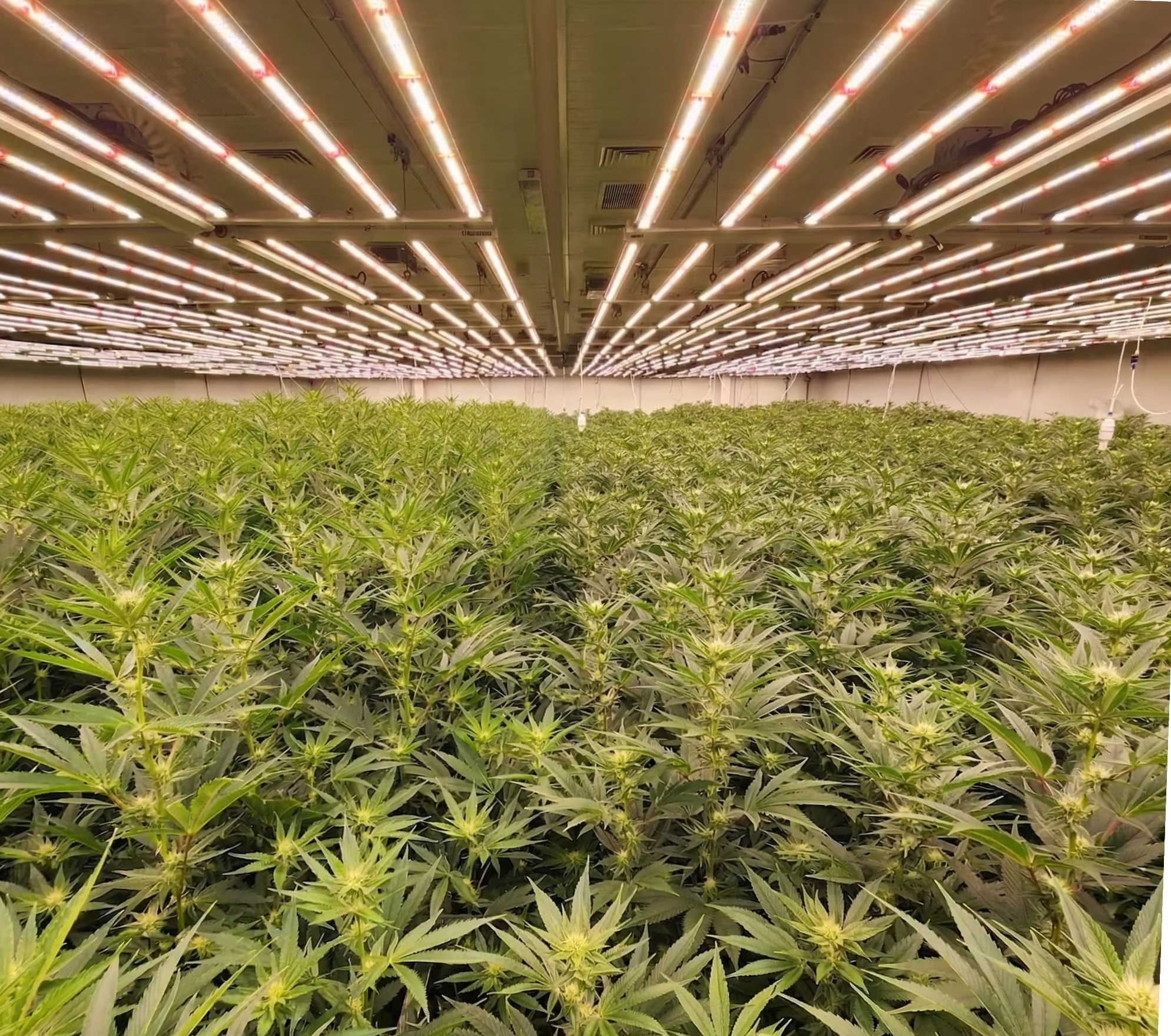
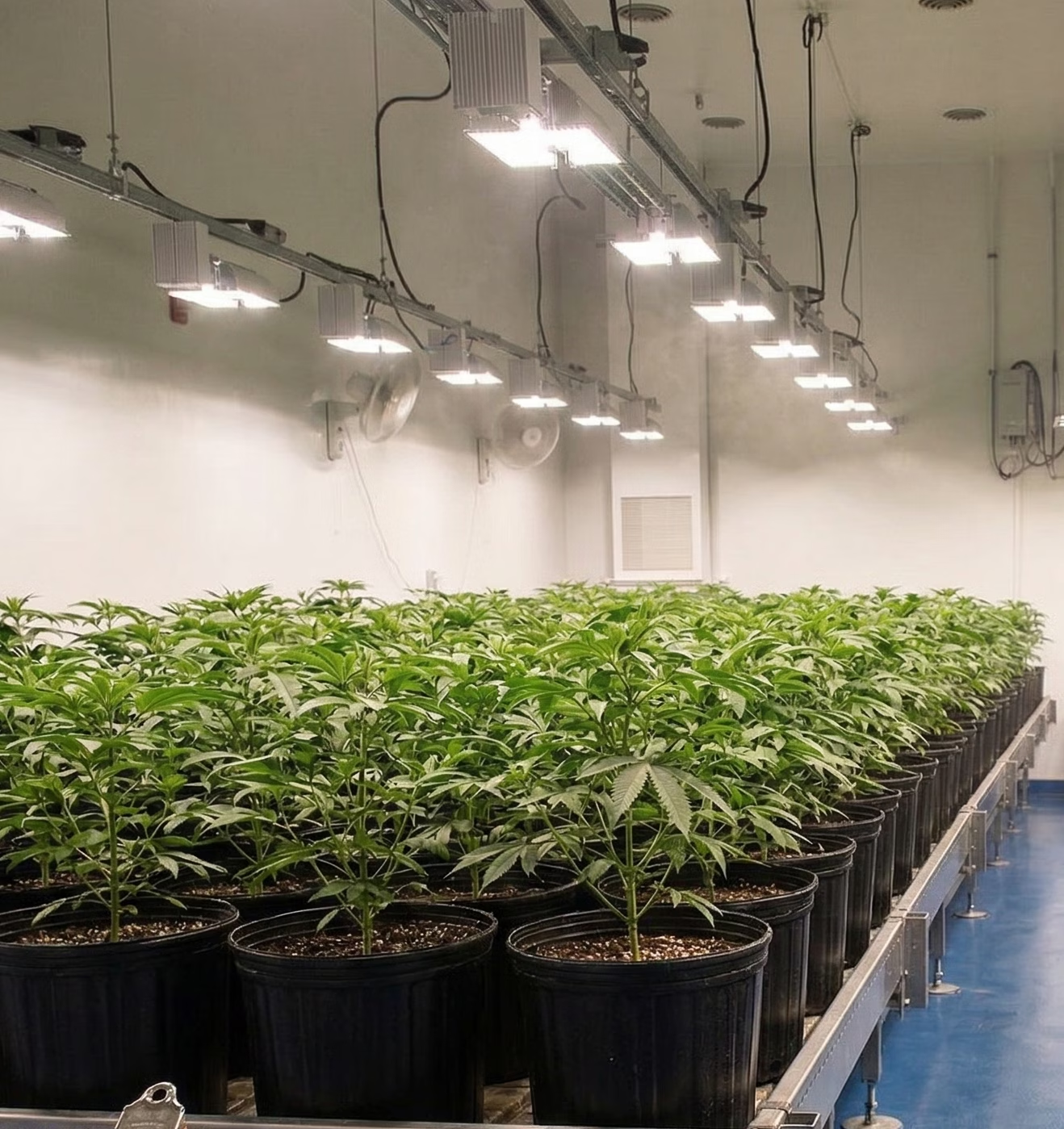
In most indoor cultivation systems, lighting accounts for the majority of electricity consumption. This is not only a question of scale, but also of function. Lighting defines how energy enters the biological system, which means that its performance influences everything that follows.
When lighting is inefficient, the impact is not limited to higher electricity use. It affects heat generation, increases the demand on cooling systems, and places additional pressure on environmental control. As a result, lighting decisions shape both the physical and economic structure of the facility.
Energy conversion and system efficiency
At its core, indoor cultivation is constrained by the efficiency of energy conversion. Electrical energy is first transformed into light, and then into chemical energy through photosynthesis. Each step introduces losses.
Only a small fraction of the original electrical input is ultimately converted into plant biomass. The rest is dissipated within the system, primarily as heat or through inefficiencies in light delivery and utilization. This explains why energy costs remain one of the dominant factors in indoor production.
Because of this, even relatively small improvements in how light is generated, distributed, and absorbed can have a meaningful effect on overall system performance.
Beyond fixture-level performance
Lighting is often evaluated based on fixture specifications such as efficacy or output. While these metrics are relevant, they do not fully describe how a lighting system performs in a real production environment.
Actual efficiency depends on several interacting factors:
- how evenly light is distributed across the canopy
- how much of that light is intercepted by plant surfaces
- how well the spectrum and intensity align with plant physiological needs
- how lighting interacts with temperature, CO₂ concentration, and nutrient availability
Plant growth is driven by the interaction of these variables rather than by light alone. For this reason, lighting efficiency should be understood at the system level.
How lighting influences production cost
The relationship between lighting and cost is direct and measurable. Since lighting is the largest consumer of electricity, its efficiency has an immediate impact on energy use per unit of production.
However, the effect extends further. A well-designed lighting system can also:
- reduce unnecessary thermal load and improve climate control efficiency
- support more uniform plant development
- improve consistency between production cycles
These factors contribute to lower cost per kilogram of marketable output, which remains one of the most relevant metrics for commercial operations.
The importance of saleable biomass
In indoor cultivation, energy is used to grow the entire plant, but only a portion of that biomass is economically valuable. Leaves, fruits, or flowers may be sold, while roots and other structural components are not.
Optimizing environmental conditions, including lighting, can increase the proportion of saleable biomass relative to total plant mass. This effectively improves the efficiency of energy use from a commercial perspective, even if total biomass production does not change significantly.
This distinction is particularly important in high-density systems where margins depend on how much of the plant can be converted into revenue.
Stability and consistency
Efficiency is not only about energy consumption. It also about the ability to produce consistent results.
Indoor systems are designed to reduce variability in yield and quality, and lighting plays a key role in achieving this goal. Uniform light distribution supports consistent plant development across the canopy, while poor lighting design introduces variability that can affect both output and predictability.
Over time, inconsistency becomes a cost, especially in operations that depend on reliable production schedules.
A system-level decision
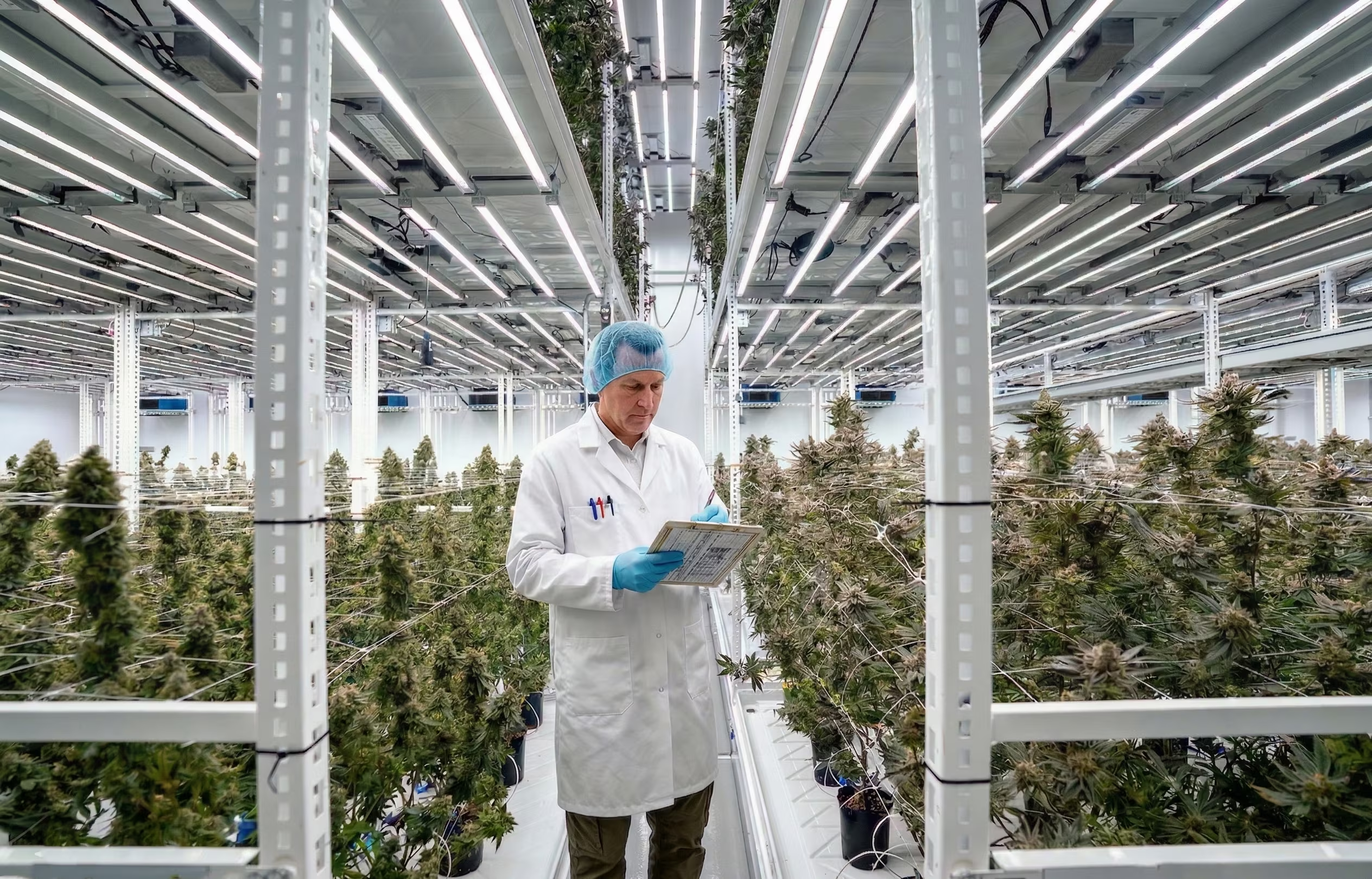
Lighting should not be treated as a standalone component. At commercial scale, it is more accurate to consider it as part of an integrated system that determines how effectively energy is converted into plant output.
Evaluating lighting purely on fixture performance overlooks the broader question, which is how well the entire system performs under real operating conditions.
Conclusion
Indoor cultivation becomes economically challenging when too much energy is required to produce a given amount of marketable crop. Since lighting defines how energy enters the system, it also plays a central role in determining how efficiently that energy is converted into output.
For this reason, lighting efficiency is not just a technical parameter. It is one of the primary factors shaping the real cost of indoor production.