Introduction
Comparisons between LED and HPS lighting are often limited to fixture efficiency or energy consumption. While these factors are relevant, they do not fully describe how each technology behaves in a commercial growing environment.
The more meaningful differences appear when lighting is considered in terms of how it interacts with plant development, canopy structure, and environmental control over time.
Light distribution and canopy interaction
One of the main differences between LED and HPS systems lies in how light is delivered to the crop.
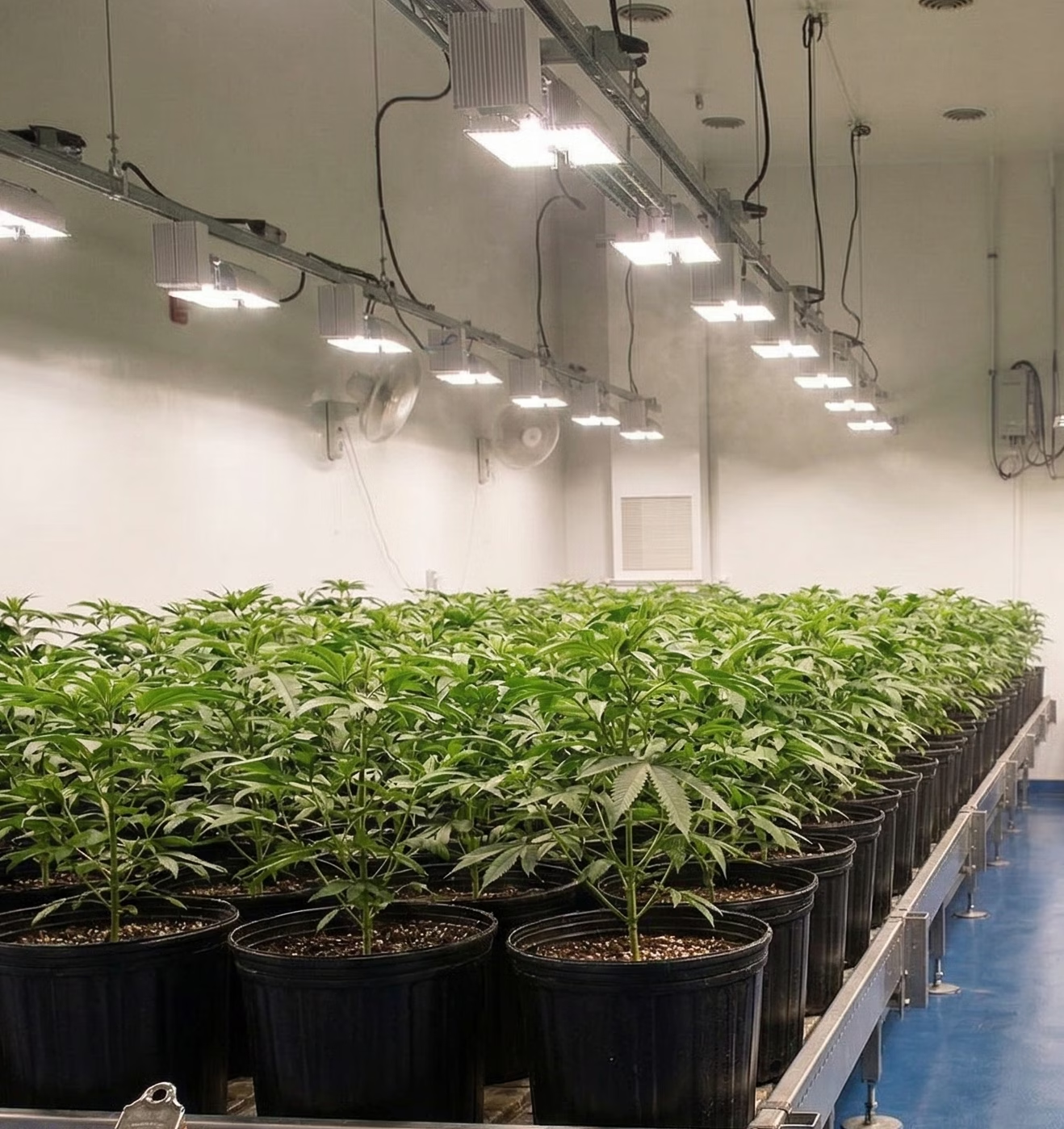
HPS fixtures function as high-intensity point sources. Their output is distributed over the canopy using reflectors, which can result in variations in light intensity depending on fixture spacing and mounting height.
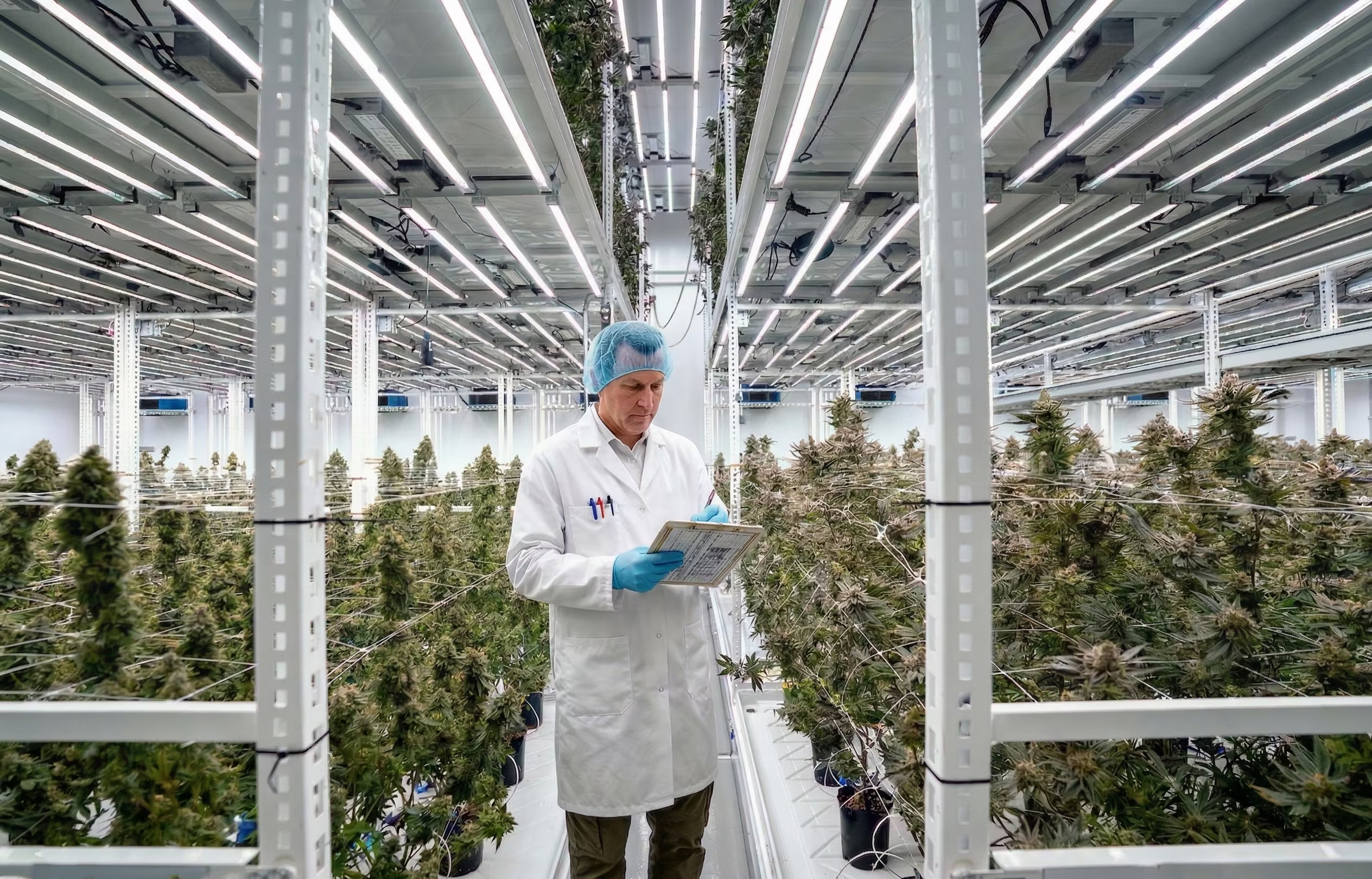
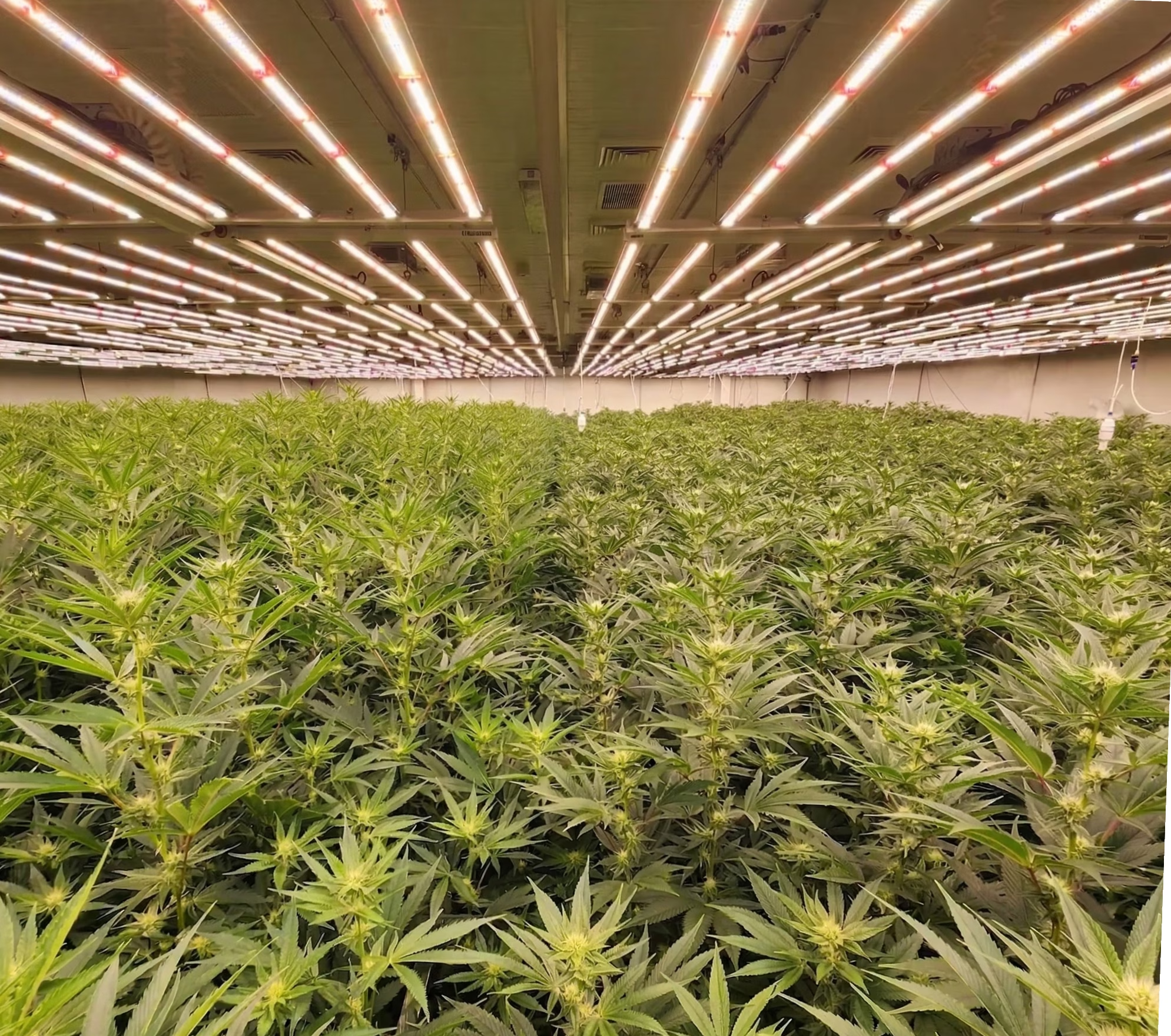
LED systems, by contrast, are often designed as arrays of smaller light sources distributed across a larger area. This allows for more controlled photon distribution when properly designed.
The result is not inherently higher uniformity, but greater flexibility in achieving uniform light levels across the canopy, which is important for consistent plant development.
Spectral characteristics and plant signaling
HPS lighting produces a spectrum that is largely fixed by the physical properties of the lamp. This spectrum supports plant growth, but offers limited ability to influence specific plant responses.
LED systems allow for more precise control over spectral composition. This makes it possible to adjust the balance of wavelengths in relation to plant developmental processes, including photomorphogenic responses regulated by photoreceptors.
Light does not only drive photosynthesis. It also acts as a signal that influences plant structure, development, and timing. The ability to adjust spectral composition provides an additional level of control over these processes.
Thermal interaction with the crop
Both LED and HPS systems ultimately convert electrical energy into heat, but the way this heat interacts with the crop differs.
HPS fixtures emit a significant portion of energy as radiant heat directed toward the canopy. This can increase leaf temperature independently of air temperature.
LED systems typically transfer a larger portion of heat through convective pathways, meaning heat is dissipated through the fixture and into the surrounding air rather than directly radiated to plant surfaces.
This difference affects how lighting integrates with climate control strategies, particularly in tightly controlled environments.
Control over intensity and photoperiod
In commercial production, the ability to control light intensity and timing is important for managing plant development.
HPS systems offer limited flexibility once installed. Adjustments are usually limited to changing fixture height or switching systems on and off.
LED systems allow for far more precise and dynamic control of light intensity through dimming, as well as flexible photoperiod management. This makes it possible to adapt lighting conditions to different growth stages or production strategies without changing physical infrastructure.
Performance stability over time
HPS lamps experience relatively rapid degradation in both output and spectral distribution, which requires periodic replacement to maintain consistent performance.
LED systems also degrade over time, but typically at a slower and more predictable rate when properly managed thermally. This can support more stable long-term operation, although actual performance depends on system design and operating conditions.
Conclusion
The difference between LED and HPS in commercial growing is not limited to fixture efficiency. It is defined by how each technology delivers light, interacts with the crop, and integrates with environmental control systems.
As controlled environment agriculture continues to evolve, lighting is increasingly used not just as an energy source, but as a tool for managing plant development.
The choice between LED and HPS is therefore not only a question of efficiency, but of how precisely light can be delivered and controlled within the production system.